

Navigating the intricate maze of United States immigration law without competent legal counsel is one of the gravest gambles an applicant can make. A clerical discrepancy on a petition, an overlooked ground of inadmissibility, or deficient corroborating evidence can precipitate an immediate denial and trigger a Notice to Appear (NTA) in immigration court. Understanding how to identify, vet, and retain a licensed immigration attorney is the cornerstone of securing lawful status.
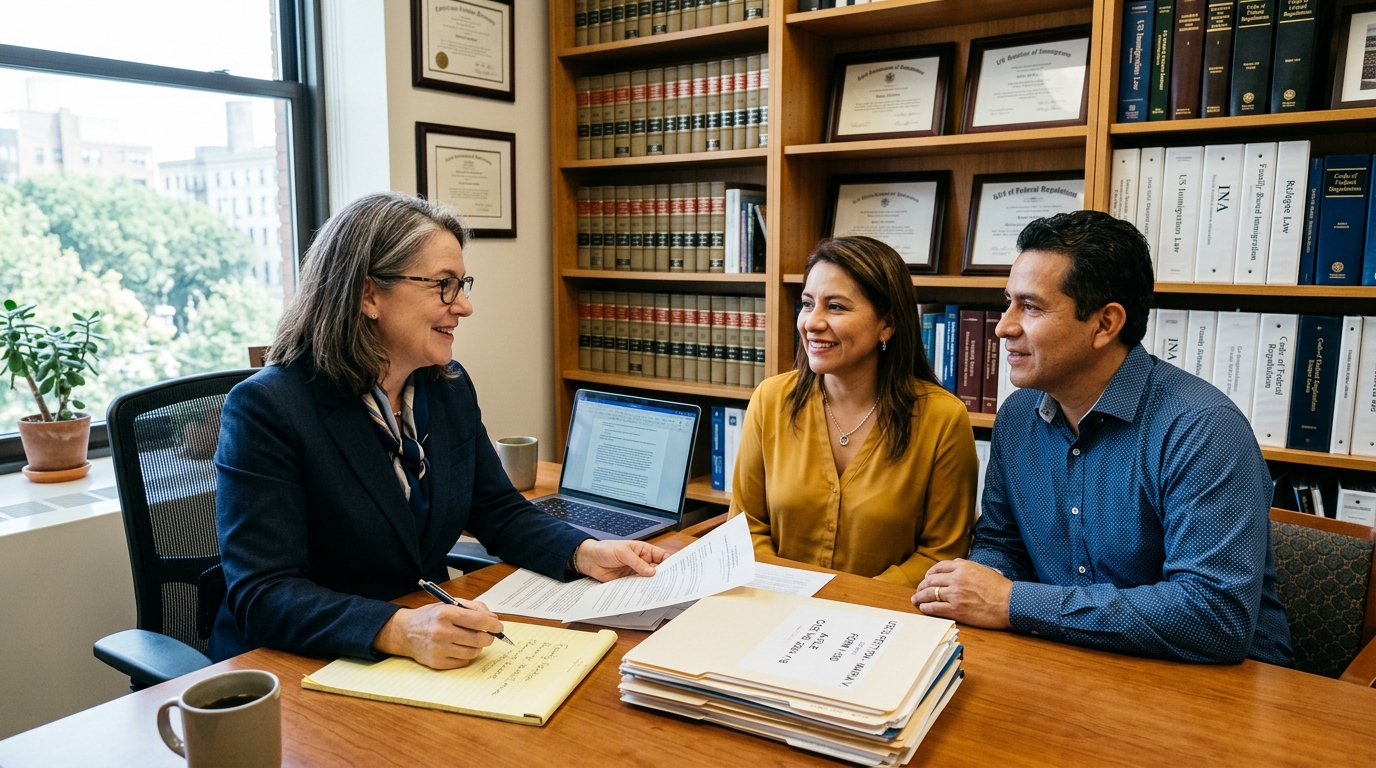
“In the U.S., a ‘notario’ is strictly a document witness, not a lawyer. Only attorneys admitted to a State Bar or Department of Justice (DOJ/EOIR) accredited representatives have legal standing to advise or represent you.”
— Patricia L. Hensley, Senior Member / American Immigration Lawyers Association (AILA)
Step-by-Step State Bar Verification
Prior to executing a Retainer Agreement or releasing funds, always request the attorney’s bar license number and verify their credentials directly through the corresponding official State Bar registry. Ensure the practitioner is in “Good Standing” with no public disciplinary suspensions. Active affiliation with the American Immigration Lawyers Association (AILA) serves as a robust benchmark of ethical accountability and specialized ongoing education.
Transparent Retainer Structures and Red Flags
Reputable immigration law firms operate primarily on transparent, itemized flat-fee structures or detailed hourly retainer accounting. Be vigilant against red flags: never hire anyone promising a guaranteed Green Card approval, advising misrepresentation on official petitions, or withholding complete file copies and USCIS official receipt notices (Form I-797C).


