
No parent should ever be forced to choose between relieving a child’s fever and safeguarding their future legal status in the United States. Unfortunately, rampant misinformation across immigrant neighborhoods has prompted families to forego routine and emergency doctor visits out of dread that clinical care counts as a “public charge.” The prevailing legal doctrine is unequivocal: federal regulations explicitly insulate basic healthcare, preventive screenings, and clinical visits from negative immigration determinations.
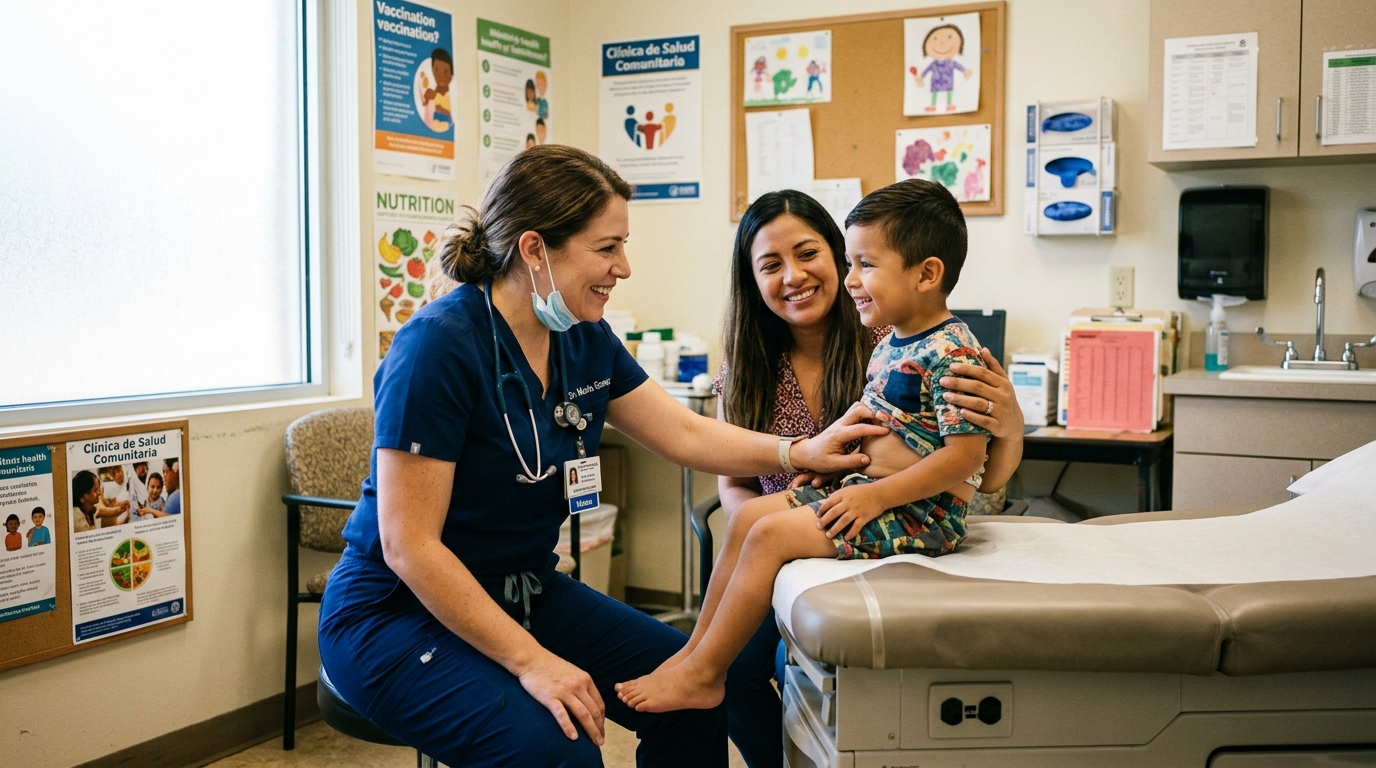
“Taking your children to a pediatrician, getting vaccinations, receiving prenatal checkups, or accessing a community clinic will NEVER count against your green card case. Health is a fundamental human right, and clinics never report patient data.”
— Dr. Marcela Guajardo, Medical Director / Esperanza Community Health Network
What Are FQHC Clinics and How Do They Operate?
Federally Qualified Health Centers (FQHCs) operate across nearly every urban and rural county in America. These community clinics receive federal funding to deliver primary medical, dental, pharmacy, and counseling services to anyone, regardless of insurance status or lack of a Social Security number. Costs are calculated using sliding-fee scales based strictly on household size and verified income.
Mental Health Resources and Migrant Trauma Healing
The arduous migration trail, separation from extended family, and chronic deportation stress impose heavy emotional tolls that frequently go unaddressed. A growing network of community clinics now provides culturally responsive, bilingual counseling and peer support circles either free of charge or on token donations, creating safe sanctuaries to restore emotional well-being.


