
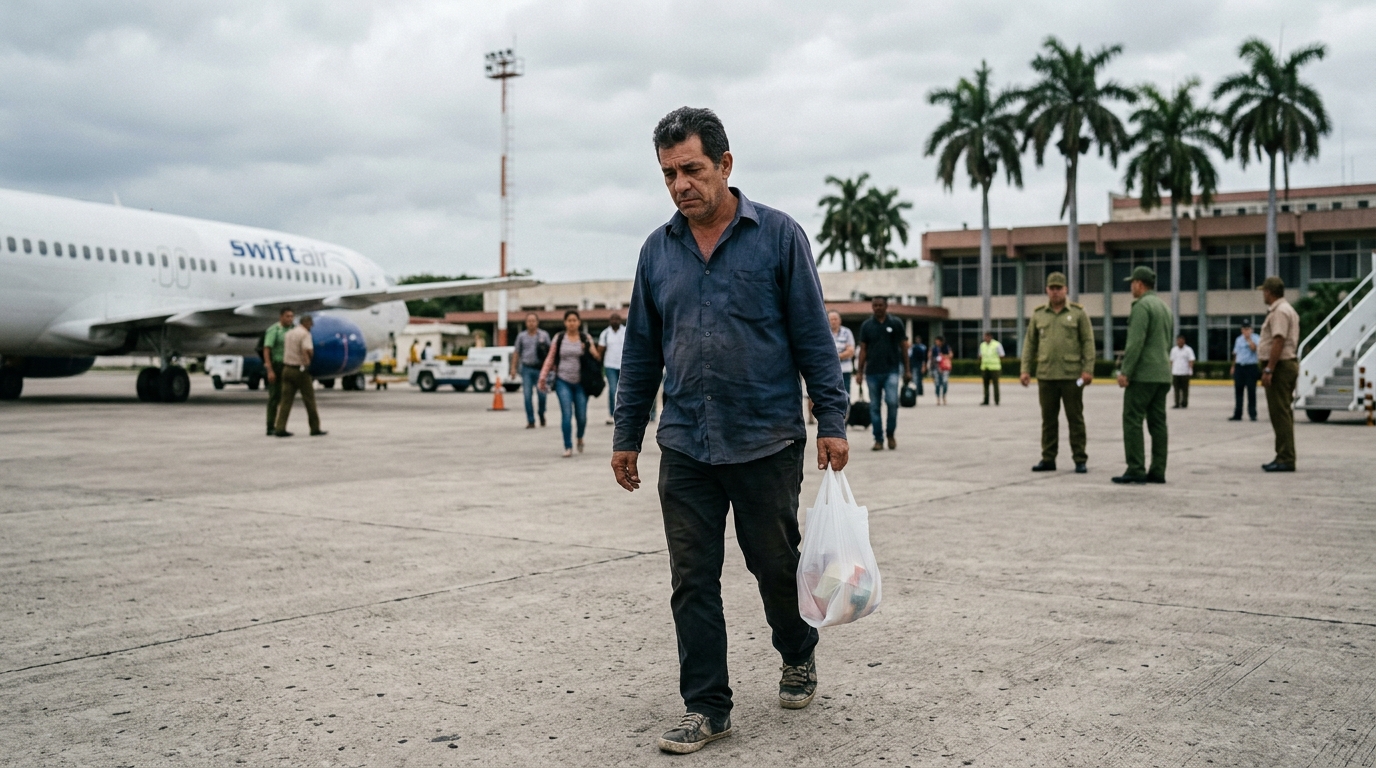
For those who risked their lives crossing the Darién Gap or navigating fragile vessels to flee political subjugation, walking down the airstairs of an ICE-chartered flight at Havana’s José Martí International Airport is the realization of their darkest fears. Clad in detention center clothing and carrying their meager belongings in single clear plastic bags, Cuban asylum seekers are handed directly over to the very state apparatus whose oppression they fled and documented during their credible fear interviews.
“In the U.S. detention center, the hearing officer ruled my testimony did not prove targeted persecution. The moment I touched down in Havana, State Security interrogators held me for eight hours, warning that my name was now flagged and any dissenting word would result in immediate imprisonment.”
— Testimonial from repatriated asylum seeker / Cuban Observatory for Human Rights (OCDH)
The Flawed Fast-Track Credible Fear Screening Machine
Human rights defenders and international legal observers emphasize that expedited asylum screenings administered within federal detention facilities take place under extreme psychological strain, without meaningful access to defense counsel. Once claims are summarily denied, returnees are sent back to an authoritarian environment where criminal code revisions specifically penalize unauthorized departures, political dissent, and peaceful protest, triggering arbitrary arrests and family retribution.
Economic Blacklisting and Permanent State Stigmatization
Instead of social reintegration, repatriated nationals face comprehensive economic isolation. In an economy largely dominated by state enterprises, a record of attempted U.S. asylum disqualifies individuals from public employment, university programs, and self-employment licensing. International legal coalitions continue calling on Washington to halt forced returns where returnees face well-documented retaliatory persecution under international non-refoulement principles.


