

They had less than ten minutes to bolt their farmhouse doors, gather their children into their arms, and flee into the surrounding hills before armed convoys seized their village. They are Mexican citizens by birth, yet they live as stateless refugees within their own country. Entire families originating from agrarian indigenous hamlets across Michoacán, Guerrero, and rural State of Mexico are fleeing lethal criminal syndicates that seized their orchards, livestock, and homes, arriving at central transit depots with shattered lives and empty hands.
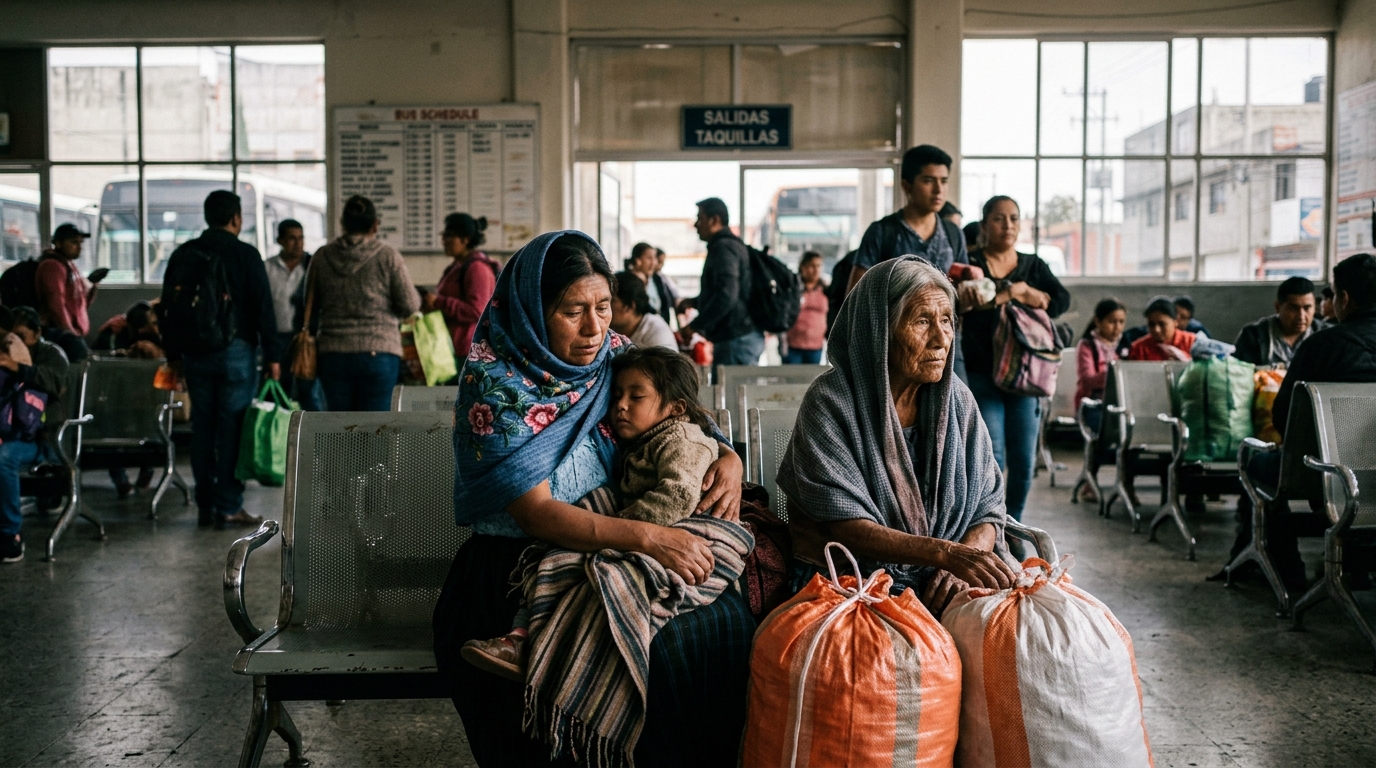
“At the prosecutor’s office, officials told us they could offer no emergency housing or certification of displacement because ‘internal refugees do not legally exist.’ They burned our home and killed two relatives, yet we remain invisible to our government because we were born in this country.”
— Juana T., displaced Purépecha campesina / Mexican Commission for the Defense and Promotion of Human Rights (CMDPDH)
The Legal Vacuum Condemning Internal Refugees to Indigence
Unlike foreign nationals who can formally seek refugee status through COMAR, Mexican families fleeing domestic criminal conflict possess no comprehensive federal legislation guaranteeing relocation assistance, emergency rations, or physical security. Civil monitoring groups estimate that over 380,000 citizens have been internally displaced nationwide. Arriving at central metropolises or northern border shelters, these families face overcrowded facilities and severe social stigma for fleeing cartel battlegrounds.
The Urgent Demand for a National Internal Displacement Framework
Victim coalitions and human rights advocates continue urging the federal legislature to pass the stalled National Law on Internal Forced Displacement. They stress that until the Mexican state establishes an official registry of internally displaced persons and allocates direct emergency humanitarian funding, hundreds of agrarian families will remain trapped in urban homelessness and permanent socio-economic fracture.


