
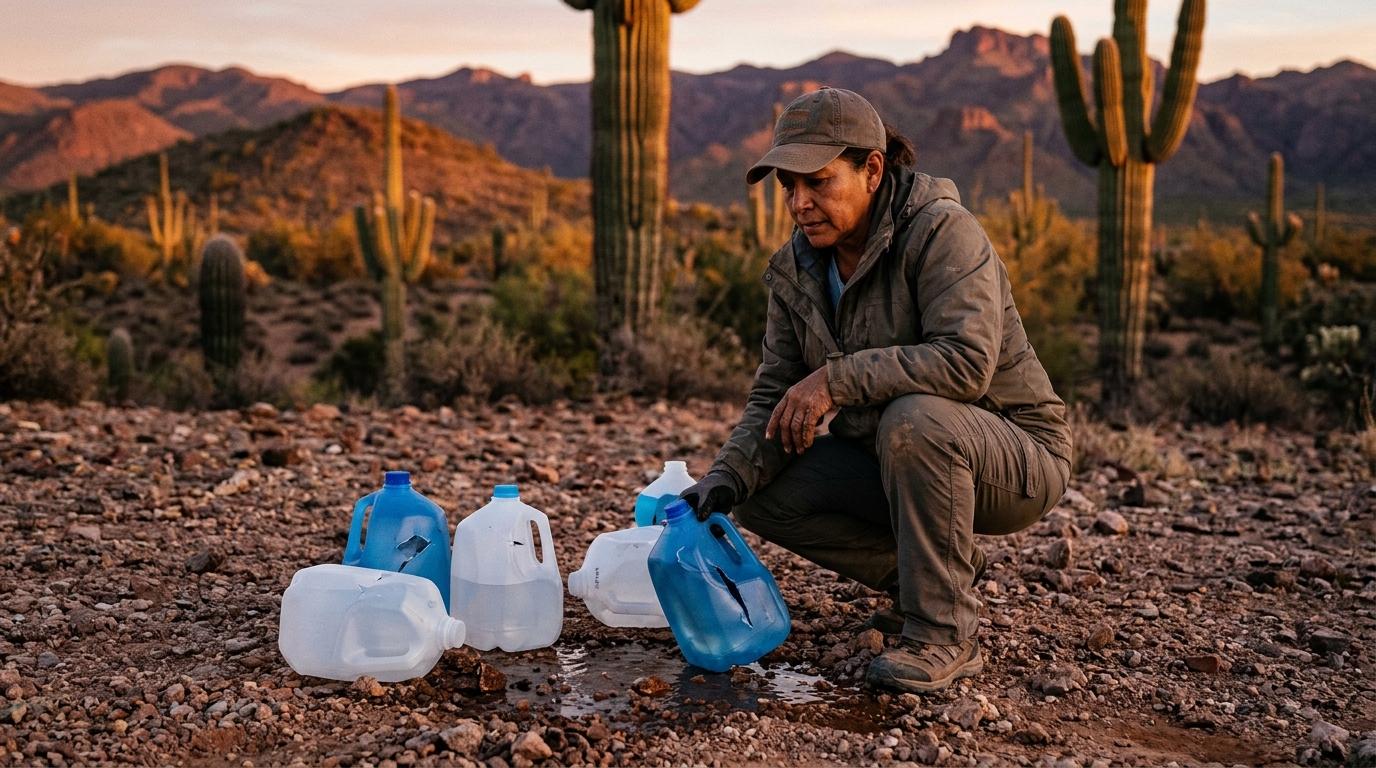
Walking across the scorching expanses of the Sonoran Desert is not merely a difficult journey; it is an extreme trial of endurance where every single drop of water marks the boundary between survival and an unmarked grave. Over recent months, human rights monitors and search brigades have documented an alarming pattern of cruelty: the deliberate, malicious destruction of gallon water stations placed along remote trails to prevent migrant deaths. Mexican workers, driven by fortified urban barriers into treacherous wilderness corridors, frequently discover slashed plastic jugs and damp earth where lifesaving relief once stood.
“Destroying a gallon of clean drinking water in a desolate canyon where there is neither shade nor cellular signal is not mere vandalism; it is a calculated death sentence against defenseless human beings whose only offense was seeking survival.”
— No More Deaths Humanitarian Collective / Desert Search & Rescue Brigades
Deterrence by Death: Pushing Migrants into Hostile Terrain
Forensic databases maintained by cross-border monitoring groups indicate that over 80 sets of human remains have been recovered this year alone across the Sasabe, Ajo, and Baboquivari wilderness sectors. The vast majority correspond to Mexican farmworkers and young laborers originating from rural villages in Oaxaca, Guerrero, Michoacán, and Zacatecas. As wall expansions seal off reachable routes, border control strategies predictably funnel walkers into furnace-like canyons where heatstroke claims human lives within 36 hours without steady hydration.
Criminalizing Compassion: The Struggle of Search Brigades
Humanitarian volunteers carrying 50-pound packs laden with electrolytic solutions and emergency rations must navigate not only hostile civilian militias patrolling federal lands, but also administrative scrutiny by authorities. Despite ongoing intimidation, groups like Águilas del Desierto continue scouring dry washes to respond to frantic family distress calls. For Mexican communities, the demand is clear: basic hydration must never be weaponized as a tool of border enforcement, and those destroying water caches must face justice.


