
Beneath the looming shadow of steel bollards and razor concertina wire lining the U.S.-Mexico border, federal enforcement reached an unprecedented threshold: 16 straight months under a strict “zero-release” doctrine for undocumented crossers. While heralded in official administrative press briefings as a quantitative deterrence milestone, on the ground in Matamoros, Reynosa, and Ciudad Juárez it manifests as a prolonged humanitarian standoff pushing civil aid systems far past their limits.
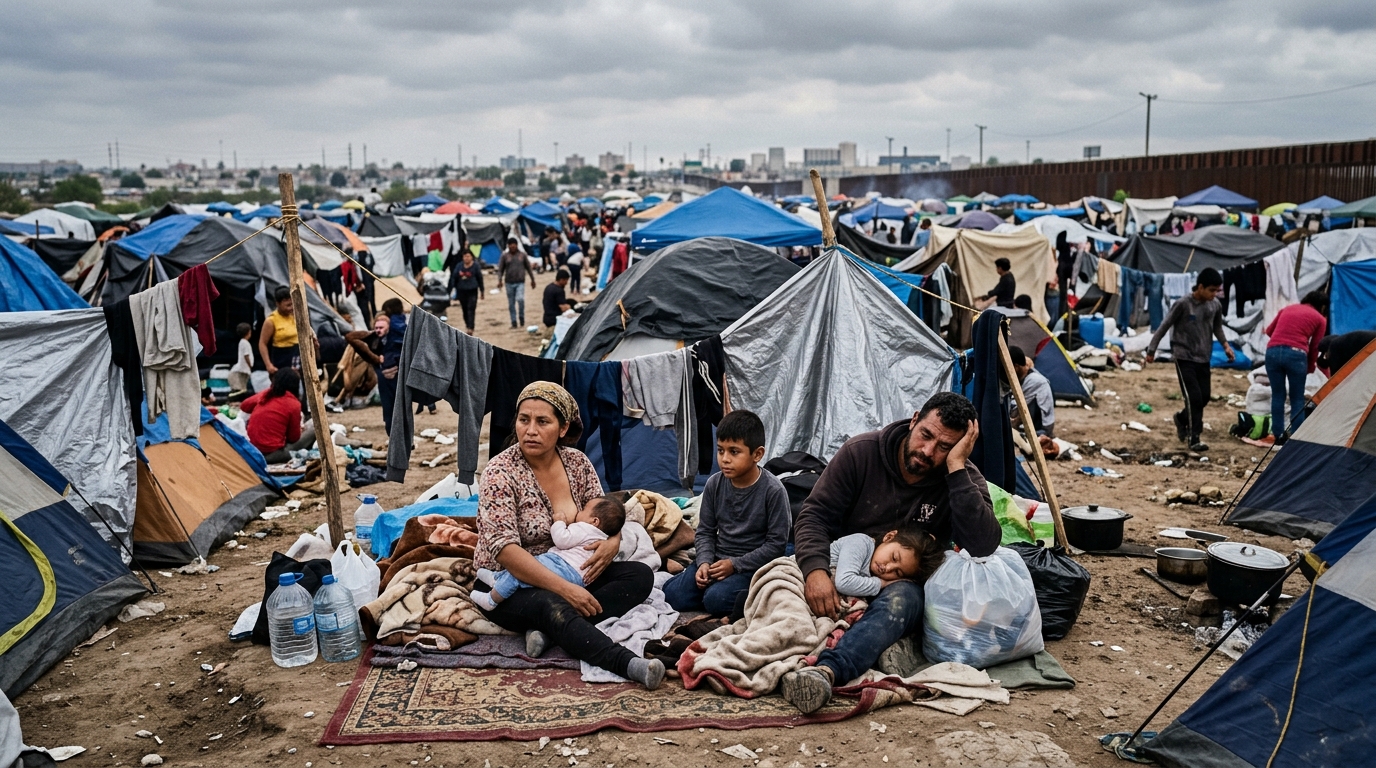
“Time here is measured in anguish: legal appointment apps remain shuttered, crossing points are sealed, and returning home means facing armed violence. We exist in total legal suspension.”
— Marisol Domínguez, mother sheltered in border camp
Acute Mental Health Strains Across Tent Settlements
Doctors Without Borders (MSF) and regional behavioral health task forces report severe psychological trauma among thousands of stranded parents and children. Enduring extreme seasonal temperatures and chronic precarity inside tarp dwellings, rates of clinical depression and post-traumatic stress disorder have quadrupled, intensified by the constant presence of human trafficking networks in adjacent areas.
Faith-Based Kitchens and Urgent Humanitarian Appeals
In the absence of comprehensive municipal aid programs, volunteer soup kitchens, parish halls, and civil networks maintain the sole daily supply of clean water and warm food for stranded families. Humanitarian coalitions continue urging regional governments to open supervised humanitarian transit corridors for vulnerable minors.


